
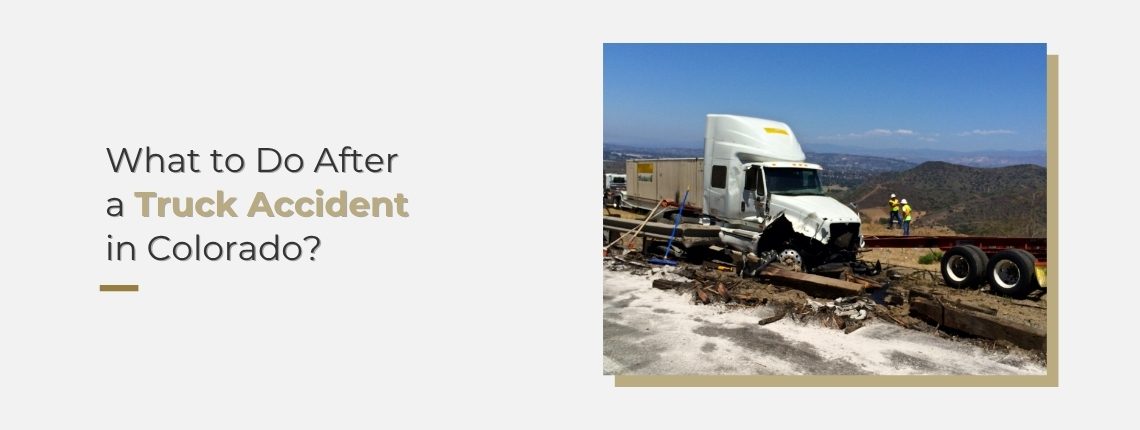
After a truck accident, the decisions you make in the first hours and days can affect your health, your financial recovery, and your legal rights.
Whether you were injured in a collision with a semi-truck, tractor-trailer, or other commercial vehicle, the steps you take immediately afterward can affect your medical recovery, the evidence available to support your claim, and your ability to recover compensation.
As a major transportation corridor in the Mountain West, Colorado’s highways carry thousands of commercial trucks every day. Interstate 25, which runs through Denver and Aurora, is one of the busiest highway corridors in the United States, carrying an annual average daily traffic of approximately 289,000 vehicles, according to the Federal Highway Administration. Major routes such as Interstate 70 and U.S. Highway 36 also carry significant commercial truck traffic, connecting busy metropolitan areas, mountain communities, and destinations throughout the state.
Serious truck accidents can occur anywhere in the state, from busy metropolitan corridors to mountain highways and rural roadways. With so many passenger vehicles and commercial trucks sharing Colorado’s roads, understanding what to do after a truck accident is important for every driver and passenger.
Truck accidents differ significantly from typical car accidents. They often involve catastrophic injuries, multiple potentially liable parties, federal trucking regulations, and insurance companies that begin investigating almost immediately. Taking the right steps after a truck accident can help protect your health, preserve critical evidence, and safeguard your ability to pursue the compensation you may need to recover.
What Should You Do After a Truck Accident in Colorado?
If you’ve been involved in a truck accident in Colorado, taking the following steps can help protect your health and preserve your legal rights:
- Call 911 and report the truck accident.
- Seek immediate medical attention.
- Document the accident scene if it is safe to do so.
- Collect information from the truck driver, trucking company, and witnesses.
- Avoid giving recorded statements to insurance companies.
- Preserve important evidence and contact an experienced Colorado truck accident attorney.
This guide explains why each of these steps matters and how they can affect your recovery and any future Colorado personal injury claim.
1. Call 911 and Report the Truck Accident
Your first priority should always be your safety and the safety of others. If possible, move to a safe location and call 911 immediately.
Emergency responders can:
- Provide necessary medical care.
- Secure the accident scene.
- Investigate the crash.
- Prepare an official police report.
A police report is often one of the most important pieces of evidence in a commercial truck accident claim. It documents the initial findings, identifies those involved, records witness statements, and may include observations about roadway conditions, traffic violations, or signs of driver impairment.
Even if the accident appears minor, reporting it ensures there is an official record of what occurred.
2. Seek Medical Attention Immediately
Not every serious injury is immediately obvious after a truck accident. The adrenaline that often follows a traumatic event can mask pain and other symptoms for hours or even days.
Some of the most common injuries following a commercial truck accident include:
- Traumatic brain injuries (TBIs)
- Spinal cord injuries
- Neck and back injuries
- Internal bleeding
- Broken bones
- Soft tissue injuries
Prompt medical evaluation is important for two reasons.
First, it allows healthcare providers to diagnose and treat injuries before they become more serious.
Second, medical records create a clear connection between your injuries and the accident. This documentation plays an important role if you later pursue compensation for medical expenses, lost income, pain and suffering, future medical care, and other damages available under Colorado law.
Follow all recommended treatment plans and attend every follow-up appointment. Consistent medical care supports your recovery and helps ensure there is a complete record of your injuries, treatment, and ongoing medical needs. It can also help your medical providers better understand the full impact of the injury and the care you may need in the future.
3. Document the Accident Scene
If your injuries allow and it is safe to do so, gather as much information as possible before leaving the scene.
Helpful evidence may include:
- Photos of all vehicles involved
- Vehicle damage
- Road conditions
- Traffic signs and signals
- Skid marks
- Weather conditions
- Cargo spills or debris
- Visible injuries
- Nearby surveillance cameras
Also collect:
- The truck driver’s contact and insurance information
- The trucking company’s name and USDOT number, if visible
- License plate numbers
- Contact information for witnesses
If possible, note whether nearby businesses, traffic cameras, or other surveillance systems may have captured the collision. Video footage is often overwritten quickly, making it important to identify potential sources of evidence as soon as possible. The more information you preserve immediately after the crash, the easier it may be to determine how the collision occurred.
4. Avoid Speaking with Trucking Insurance Companies Before Understanding Your Rights
After a commercial truck accident, trucking insurance companies often begin investigating immediately. An insurance adjuster may contact you within days, or even hours, requesting a recorded statement or asking you to sign documents.
Although these conversations may seem routine, insurance companies begin evaluating liability and potential damages from the very beginning.
Before the full extent of your injuries is known, avoid:
- Giving recorded statements.
- Guessing how the accident occurred.
- Speculating about your injuries.
- Accepting an early settlement offer.
- Signing medical authorizations or releases without understanding their purpose.
While insurance adjusters may seem helpful, their role is to protect the interests of the trucking company and its insurer. Before discussing the details of the accident or accepting a settlement offer, it is important to understand your legal rights and the full extent of your injuries.
Early statements can later be used to dispute liability or minimize the value of your claim. Taking time to understand your legal options before communicating extensively with insurance companies can help protect your interests.
5. Preserve Critical Evidence After a Truck Accident
One of the most significant differences between a commercial truck accident and a passenger vehicle collision is the amount of evidence that may be available. Much of this evidence is controlled by the trucking company and may only be retained for a limited period unless steps are taken to preserve it.
Important evidence may include:
- Electronic logging device (ELD) data
- Black box or event data recorder information
- Driver qualification files
- Hours-of-service records
- Vehicle inspection and maintenance records
- Trucking company safety policies
- Cargo loading documentation
- Dash camera footage
- Dispatch communications
Commercial trucking companies and drivers are also subject to both Colorado law and federal regulations enforced by the Federal Motor Carrier Safety Administration (FMCSA). These regulations govern driver qualifications, hours of service, vehicle inspections, maintenance requirements, and cargo securement. Records related to these requirements may provide important information about how a truck accident occurred and whether a safety violation contributed to the crash.
This evidence can help determine whether the truck driver or trucking company violated federal safety regulations, exceeded allowable driving hours, failed to properly inspect or maintain the vehicle, or otherwise acted negligently.
Depending on the circumstances, liability may extend beyond the truck driver. A thorough investigation may identify responsibility on the part of the trucking company, a maintenance contractor, a cargo loading company, a vehicle manufacturer, a defective parts manufacturer, or another third party whose negligence contributed to the crash. A thorough investigation may also reveal whether the trucking company’s policies, operational decisions, or safety practices contributed to the crash.
Because commercial carriers often have rapid response teams and investigators working immediately after a serious collision, preserving this evidence as early as possible can play a significant role in building a strong truck accident claim.
6. Contact an Experienced Colorado Truck Accident Attorney
Truck accident cases are among the most complex personal injury claims.
They often require an understanding of both Colorado personal injury law and the federal regulations that govern the commercial trucking industry. Determining what happened may require reviewing electronic data, maintenance histories, driver records, company policies, inspection reports, and other evidence, often with the assistance of accident reconstruction specialists and other experts.
Unlike many passenger vehicle accidents, these cases frequently involve multiple insurance policies, corporate defendants, federal transportation regulations, and significant medical damages.
An experienced Colorado truck accident attorney can help:
- Conduct a thorough truck accident investigation.
- Preserve important evidence before it is lost.
- Identify all potentially responsible parties.
- Work with medical experts and accident reconstruction specialists.
- Handle negotiations with trucking insurance companies.
- Prepare your case for trial if necessary.
Colorado truck accident claims are also subject to strict legal deadlines. Acting promptly allows your attorney to preserve evidence, evaluate liability, assess current and future damages, and build the strongest possible case.
Depending on the circumstances, injured victims may be entitled to recover compensation for medical expenses, lost income, diminished earning capacity, future medical treatment, pain and suffering, and other damages available under Colorado law.
An experienced attorney can also take the time to understand how the injury has affected your health, work, family, daily life, and future plans. This broader understanding can help shape a legal strategy that reflects your individual needs and goals, rather than treating the case as a collection of medical records and financial losses.
Protect Your Health and Your Legal Rights After a Truck Accident
Your health should always come first after a truck accident. Once you have received medical care, taking the appropriate steps to preserve evidence and understand your legal rights can make a meaningful difference in the outcome of your claim.
For more than two decades, Debbie Taussig has represented individuals and families throughout Colorado in complex personal injury cases involving serious injuries and commercial trucking companies. She understands the unique challenges these cases present, from preserving critical evidence and investigating liability to negotiating with trucking insurance companies and preparing cases for trial when necessary.
At Debbie Taussig Law, Debbie and her team take the time to understand the full impact an injury has had on each client’s health, family, work, daily life, and future. That perspective helps guide a thoughtful legal strategy tailored to the circumstances of the case. The firm’s goal is to provide clear guidance and consistent support throughout the legal process so clients can focus on their recovery and daily lives while the legal team manages the complexities of their case.
If you or a loved one has been injured in a commercial truck accident, Debbie Taussig Law can help you understand your options, protect your rights, and pursue the compensation you deserve. Contact us to schedule a complimentary consultation to discuss your case. We will take the time to listen to your story, answer your questions, and explain the next steps so you can make informed decisions about your future with confidence.