


Article Summary:
- Definition and examples of pre-existing conditions, including physical and psychological types.
- Explanation of how accidents can aggravate existing conditions and still justify compensation.
- Key legal doctrines: Eggshell Skull Rule (full liability even for vulnerable victims) vs. Crumbling Skull Rule (liability only for aggravated harm).
- Importance of medical evidence, documentation, and transparency in proving worsened injuries.
- How Colorado law applies these doctrines and protects injured individuals with pre-existing conditions.
- Role of a personal injury lawyer in gathering medical proof, countering insurance challenges, and securing fair compensation.
You had an old injury, so does that mean you don’t deserve compensation for what happened now?
That’s the question many people face when they file a personal injury claim with a pre-existing condition. Insurance companies may try to use your medical history against you. They might argue that your pain or injuries weren’t caused by the accident, but were already there.
Having a pre-existing condition does not cancel your rights. If the accident made your condition worse or caused new harm, you may still be entitled to compensation.
In this blog, we’ll break down how pre-existing conditions affect personal injury claims, how the law protects you, what evidence matters, and how a lawyer can help you get a fair outcome.
At Debbie Taussig Law, we understand that having a pre-existing condition shouldn’t stand in the way of a fair personal injury settlement. That’s why we focus on building strong, evidence-based cases and negotiating effectively to help you get the compensation you deserve, without unnecessary delays or setbacks.
Pre-Existing Conditions Explained: Types, Impact, and Legal Importance
A pre-existing condition is any health problem or injury you had before the accident or event you’re now claiming about. It could be something physical, like a past back injury or a previous surgery, or a mental health issue, such as anxiety or trauma from an earlier experience. In personal injury cases, these conditions matter because they already existed before the new incident.
However, the law doesn’t automatically deny your claim because of them. What matters is whether the recent accident made your condition worse or caused new symptoms. The focus is on how much the incident contributed to your current health issues.
Types of Pre‑Existing Conditions and Their Impact
-
Physical Pre‑Existing Conditions
These are medical conditions that affect the body. Common examples include:
- Arthritis – A condition that causes joint pain and stiffness. It can be worsened by trauma, such as a slip and fall.
- Back or Neck Injuries – Old injuries from accidents, sports, or work. These areas are sensitive and can be more easily hurt.
- Previous Surgeries – Areas where a person has already had surgery, like a knee or spine, may not be as strong and can suffer new damage faster.
If someone with a prior physical condition gets into a new accident, that event can make their existing problem worse. The latest injury might increase pain, reduce mobility, or require new treatment or surgery.
-
Psychological Pre‑Existing Conditions
These relate to mental health. Common conditions include:
- Anxiety – Persistent worry or nervousness that may worsen after a traumatic event.
- Depression – Feelings of sadness or loss of interest that can become deeper after an accident.
- Post-Traumatic Stress Disorder (PTSD) – A condition triggered by past trauma, which can be reignited or worsened by a new stressful incident.
If a person already struggles with a mental health condition, a new traumatic event can intensify symptoms. They may need more therapy, medication, or support after the incident.
Let’s say someone had a previous lower back injury from lifting heavy boxes at work a few years ago. It healed partially, but they still had occasional pain. Now, they are involved in a car accident where their vehicle is hit from behind. After the crash, their back pain becomes much worse. They may now have:
- Daily pain instead of occasional discomfort,
- Trouble sleeping, standing, or walking,
- New medical needs such as physical therapy, injections, or even surgery.
The accident didn’t cause the original back injury. But it made the condition worse. This worsening is called aggravation, and it can be part of a personal injury claim.
Why Pre-Existing Conditions Play a Critical Role in Personal Injury Claims?
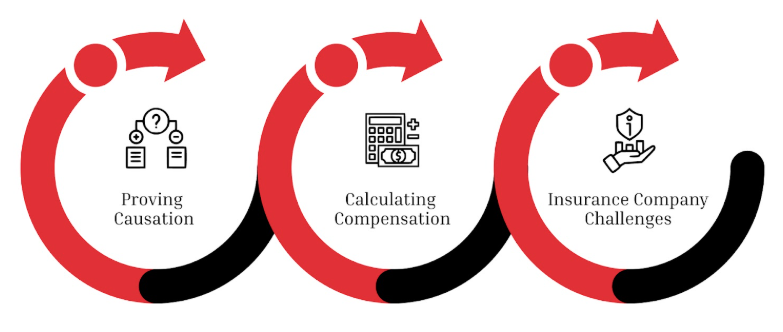
Pre-existing conditions often become a central issue in personal injury cases. They influence how damages are calculated, how responsibility is assessed, and how much compensation the injured person may receive. Below are three essential reasons why these conditions are relevant:
-
Proving Causation
Causation means showing that the accident directly caused the injury. When someone already has a medical condition, it becomes harder to prove that the new incident is the main reason for their pain or disability.
For example, if a person has an old neck injury from a past accident, and then gets into a new car crash, they must show that the collision made their condition worse. This often requires medical records or expert opinions. Without proof, the insurance company may argue that the injury already existed and deny or reduce the claim.
-
Calculating Compensation
Pre-existing conditions can affect the amount of compensation awarded. Courts and insurers want to separate the effects of the old condition from the new harm caused by the accident.
If someone had a chronic back issue but was managing it well before a fall, and now needs surgery or can’t work, they may be entitled to compensation for the new or worsened symptoms. However, they won’t be compensated for the part of their condition that would have gotten worse anyway. Medical records and doctor testimony are often used to make this distinction.
-
Insurance Company Challenges
Insurance companies often use pre-existing conditions as a reason to limit or deny claims. They may argue that the injury or pain was already present and not related to the accident.
This is why complete medical transparency is essential. If the injured person can show how their condition changed after the incident, they can challenge the insurer’s position. A detailed medical history helps clarify whether the accident made things worse or caused new damage.
Legal Doctrines That Shape Injury Claims: Eggshell Skull vs. Crumbling Skull
In personal injury law, two legal rules often come into play when a person has a pre-existing condition: the Eggshell Skull Rule and the Crumbling Skull Rule. These doctrines help courts decide how much responsibility the defendant holds when the injured person was already vulnerable or ill before the accident.
-
Eggshell Skull Rule
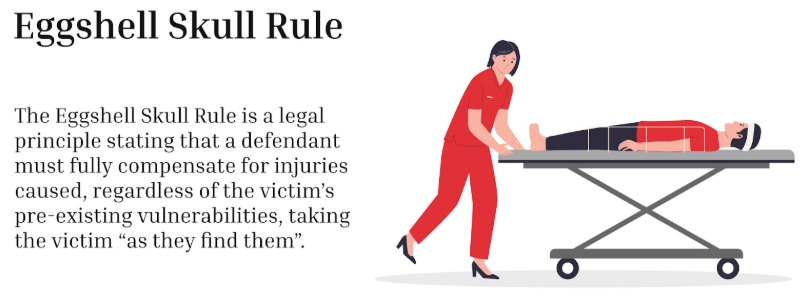
This rule says the defendant must accept the victim “as they are,” even if the victim is more fragile than the average person. If the accident worsens an existing condition or causes serious harm because of the person’s vulnerability, the defendant is still fully responsible for all the damage.
For example, suppose someone with a brittle bone condition is lightly bumped and ends up with a broken leg. Even though most people wouldn’t have been seriously hurt, the person who caused the bump is still liable for the injury. The law does not reduce responsibility just because the injured person was more likely to suffer harm.
-
Crumbling Skull Rule

This rule limits the defendant’s liability. It recognizes that the injured person already had a condition that was likely to get worse over time, even without the accident. The defendant is only responsible for the harm they actually caused, not for the natural decline that would have happened anyway.
For example, imagine someone had a degenerative back condition that was getting worse slowly. Then they are in a car accident that speeds up that decline. Under the crumbling skull rule, the defendant is only responsible for how much the accident worsened the condition, not the whole state of the person’s back now, since it would have likely worsened regardless.
Let’s consider a simple case to compare the two rules:
A woman with mild osteoporosis falls after being pushed and breaks her hip. A healthy person might have had only a bruise. Under the Eggshell Skull Rule, the person who pushed her is fully responsible for the broken hip, because they must take her as they find her, even if she was more fragile.
Now, imagine a man with advanced arthritis in his knee. He slips on a wet floor in a store. The fall speeds up the damage that was already progressing. Under the Crumbling Skull Rule, the store may only be liable for the added damage, not the entire knee condition, since the joint was already deteriorating before the fall.
Both rules aim to be fair. The first protects vulnerable victims from being blamed for their condition. The second ensures defendants don’t pay for harm they didn’t cause. Courts apply them based on medical evidence and expert opinion.
The Essential Role of Evidence and Documentation in Injury Cases
Medical records play a critical role in personal injury claims, especially when a pre-existing condition is involved. They help prove how much of the injury is new and how much existed before the accident. Here’s how proper documentation supports the claim.
-
Importance of Detailed Records
Accurate medical records are essential to compare the person’s health before and after the accident. These records help show whether the incident caused any new injuries or worsened an existing condition.
For example, if someone had mild back pain before an accident and now needs surgery, the records must clearly show that change. Without proper documentation, it becomes hard to prove that the accident made things worse. This can reduce the amount of compensation or lead to a rejected claim.
-
Supporting Tools
Several tools can strengthen a personal injury claim. Diagnostic imaging (like X-rays or MRIs) helps show physical changes or new damage. Doctor’s reports written before and after the accident offer a medical comparison. Expert opinions can explain how the accident likely caused the aggravation. Using these tools, a lawyer can build a timeline that clearly shows the impact of the accident.
-
Transparency Matters
Hiding or failing to mention a pre-existing condition can harm a claim. If insurance companies or courts find out later, it can damage the injured person’s credibility. Being honest about past health issues helps show that the person is not trying to exaggerate the claim. It also allows the focus to stay on how the condition got worse, which is often where compensation is justified.
How Pre‑Existing Conditions Are Treated Under Colorado Personal Injury Law
Colorado law, and by extension, Boulder courts, applies established doctrines that govern cases involving pre-existing conditions:
-
Eggshell (Thin Skull) Doctrine
Defendants must “take the plaintiff as they find them.” If a pre-existing condition is aggravated due to someone’s negligence, the defendant remains fully liable—even if a typical person would not have been harmed as severely. Courts instruct jurors not to reduce damages simply because the plaintiff was more vulnerable.
-
Aggravation or Crumbling Skull Doctrine
While the eggshell rule protects vulnerable plaintiffs, another rule ensures fairness. Defendants aren’t responsible for the natural progression of a pre-existing condition. They are only liable for the portion of harm directly caused or worsened by the incident.
Colorado courts maintain that both doctrines can apply together. If the injury can be separated into what existed before and what occurred due to the accident, damages are limited to the added harm. If separation isn’t possible, full damages may be awarded.
The Role of a Personal Injury Attorney in Claims with Pre-Existing Conditions
Handling a personal injury claim becomes more complex when a pre-existing condition is involved. Insurance companies may use this to downplay your injuries or offer less compensation. A personal injury lawyer can guide you through the process and help protect your rights.
-
Building a Strong Case with Medical Evidence
A lawyer will work with doctors and medical experts to gather detailed records. These records help show how the accident worsened your existing condition or caused new injuries. The lawyer ensures all documents clearly explain the difference between your health before and after the incident.
-
Dealing with Insurance Companies
Insurance adjusters often try to limit payouts by blaming your condition on past injuries. A lawyer handles all communication with the insurance company. They push back against unfair offers and make sure your claim reflects the real impact of the accident.
-
Applying Legal Protections
A personal injury lawyer understands legal rules like the Eggshell Skull Rule, which protects people with pre-existing conditions. They use these rules to argue for full compensation when the accident made your condition worse, even if you were more vulnerable to injury.
Working with an experienced Colorado personal injury lawyer, such as Debbie Taussig Law, ensures that your pre-existing conditions are adequately addressed, documented, and presented. This level of attention helps prevent disputes, minimizes delays, and strengthens your claim by clearly showing how the accident worsened your condition, giving you the best chance at fair compensation.
Ready to Protect Your Rights? Get Expert Legal Help for Your Injury Claim from a Colorado Injury Lawyer

Recovering from an accident is difficult—especially when you’re already managing a pre-existing condition. Medical costs, lost income, and increased symptoms can take a serious toll, while insurance companies often try to shift blame or reduce payouts.
At Debbie Taussig Law, we make sure your settlement reflects the full extent of your injuries, including the aggravation of any prior conditions. We collaborate with medical professionals and legal experts to clearly document your case, proving the difference between past health issues and new or worsened injuries caused by the accident.
Whether your case involves a car crash, slip and fall, or any other serious incident, you deserve compensation that supports your recovery and long-term care.